UPDATE: 12:30 P.M.
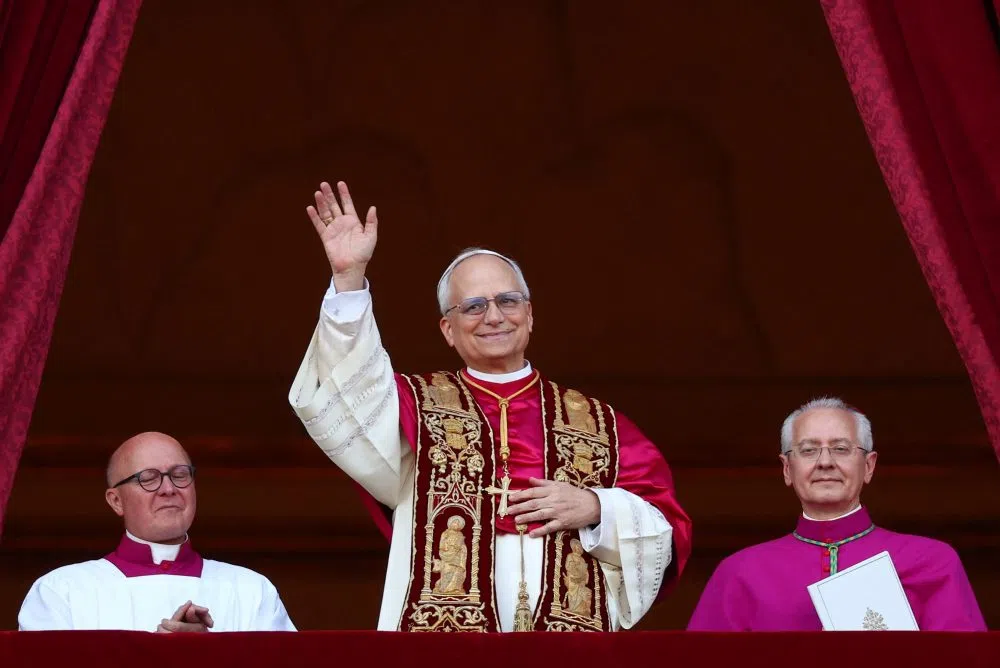
VATICAN CITY (Reuters) -U.S. Cardinal Robert Prevost was elected in a surprise choice to be the new leader of the Catholic Church on Thursday, taking the name Leo XIV, becoming the first American pontiff.
Pope Leo, appeared on the central balcony of St. Peter’s Basilica around 70 minutes after white smoke billowed from a chimney atop the Sistine Chapel signifying the 133 cardinal electors had chosen a new leader for the 1.4 billion-member Catholic Church.
The choice of Prevost was announced by French Cardinal Dominique Mamberti with the Latin words “Habemus Papam” (We have a pope) to tens of thousands of people gathered in St. Peter’s Square to hear the news.
Aged 69 and originally from Chicago, Prevost has spent most of his career as a missionary in Peru and became a cardinal only in 2023. He has given few media interviews and rarely speaks in public.
Leo becomes the 267th Catholic pope after the death last month of Pope Francis, who was the first Latin American pope and had led the Church for 12 years and widely sought to open the staid institution up to the modern world.
Francis enacted a range of reforms and allowed debate on divisive issues such as women’s ordination and better inclusion of LGBT Catholics.
Ahead of the conclave, some cardinals called for continuity with Francis’ vision of greater openness and reform, while others said they wanted to turn back the clock and embrace old traditions.
(Reporting by Joshua McElwee, Crispian Balmer, Philip Pullella and Alvise ArmelliniAdditional reporting by Cristina CarlevaroEditing by Frances Kerry and Keith Weir)
———————–
VATICAN CITY (Reuters) -White smoke rose from the Sistine Chapel on Thursday and the bells of St. Peter’s rang out, signalling that cardinals have elected a new pope to succeed Pope Francis and take charge of the Roman Catholic Church.
The election came on the first full day of voting by the 133 cardinal electors, who secluded themselves behind the Vatican’s medieval walls on Wednesday afternoon.
A joyous crowd in St. Peter’s Square cheered and applauded as the first puffs of smoke emerged from a small chimney on the roof of the Sistine Chapel, where the cardinals have been holding their secret ballot.
The identity of the pope and the name he has chosen as pontiff will be announced to the world from the central balcony of St. Peter’s Basilica shortly.
The new pope will then step forward to deliver his first public address and blessing to the gathered crowds.
Pope Francis died on April 21 after ruling the 1.4-billion member Church for 12 years. During his reign he sought to open up the staid institution to the modern world, enacting a range of reforms and allowing debate on divisive issues such as women’s ordination and better inclusion of LGBT Catholics.
While no clear favourites had emerged to succeed him, Italian Cardinal Pietro Parolin, who served as the Vatican’s number two under Francis, and Filipino Cardinal Luis Antonio Tagle were considered the frontrunners.
Other “papabili” – potential papal candidates in Italian – were France’s Jean-Marc Aveline, Hungary’s Peter Erdo, American Robert Prevost, Italy’s Pierbattista Pizzaballa and Filipino Pablo Virgilio David.
The cardinals will have had to decide whether to pick someone to build on Francis’ vision of greater openness and reform, or else choose a more conservative figure.
During the conclave their only communication with the outside world was through the smoke emerging from the chimney – black for no pope yet picked, white signalling a new pontiff chosen by a majority of at least two-thirds.
The cardinals held an initial inconclusive vote on Wednesday evening and a further two followed on Thursday morning. They returned to the Sistine Chapel at 4 p.m. (1400 GMT) and at around 6:08 p.m. (1608 GMT) the white smoke emerged.
During the conclave, cardinals were sequestered from the world and sworn to secrecy, their phones and computers confiscated, while they were shuttled between the Sistine Chapel for voting and two Vatican guesthouses to sleep and dine.
The average number of ballots it has taken to be elected over the past 10 conclaves was 7.2. Francis was elected after five in 2013.
(Reporting by Joshua McElwee, Crispian Balmer, Philip Pullella and Alvise ArmelliniAdditional reporting by Cristina CarlevaroEditing by Nia Williams and Frances Kerry)